Chess rules
What is en passant?
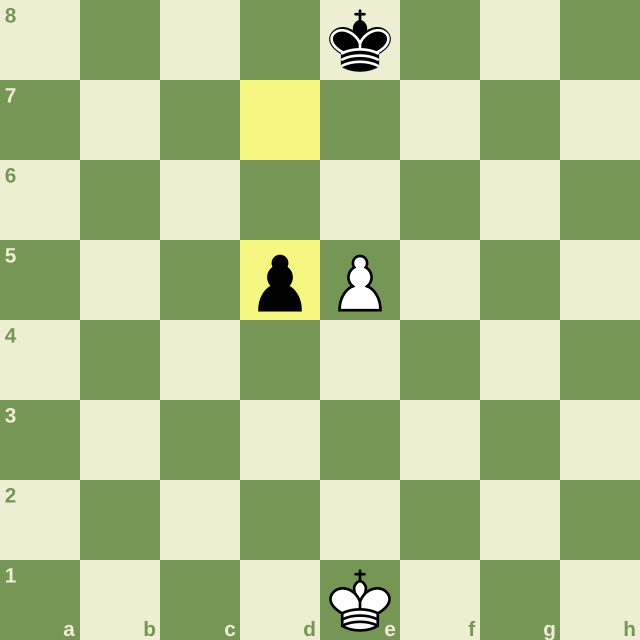
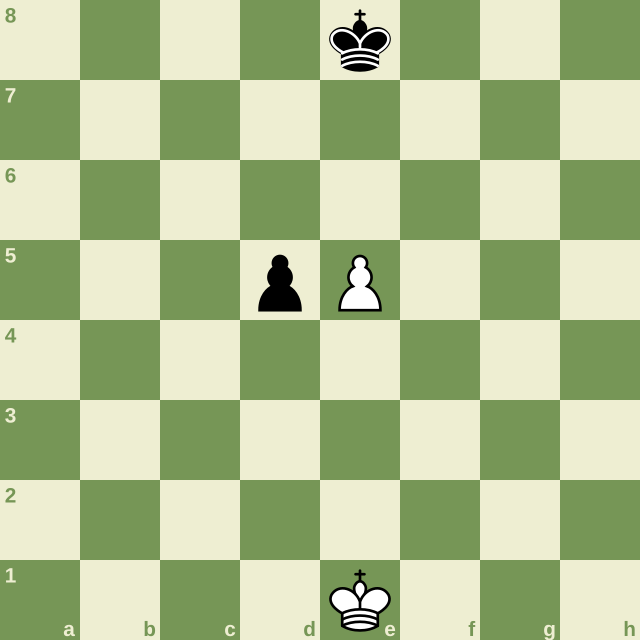
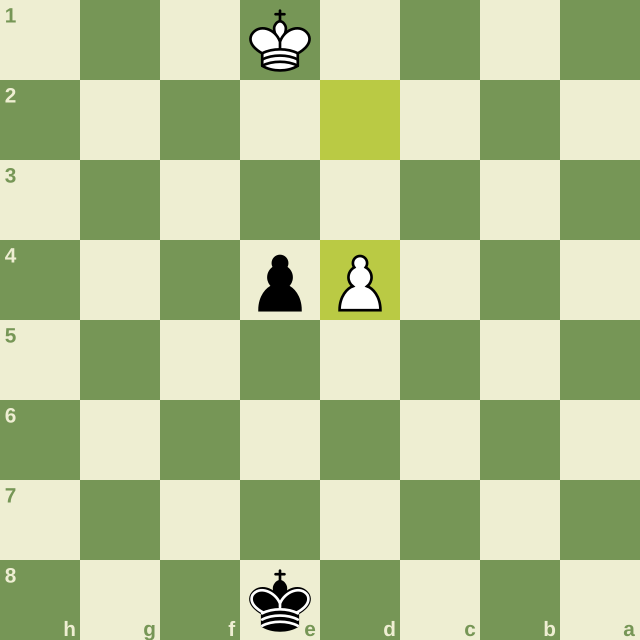
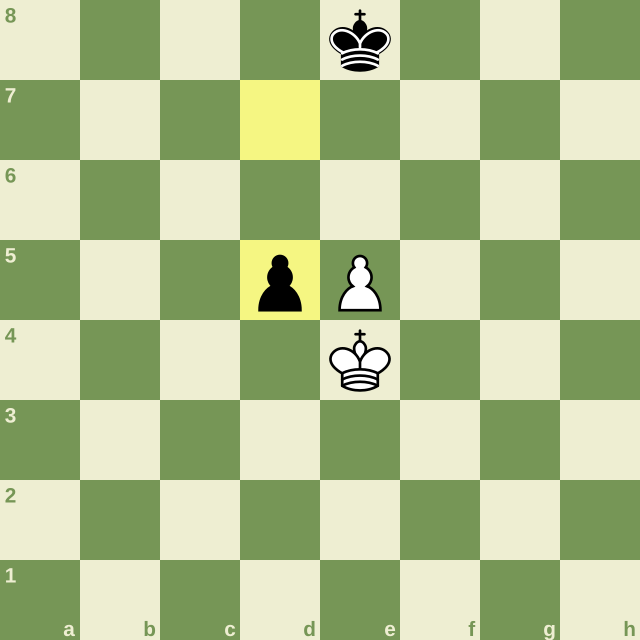
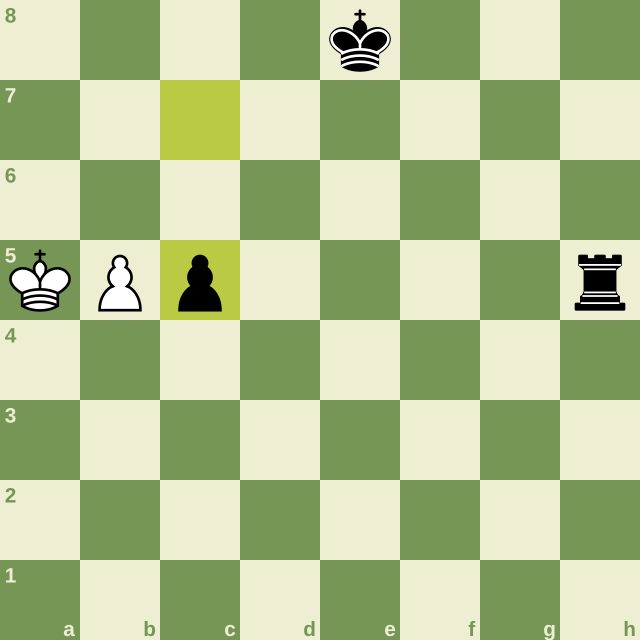
When a pawn moves two squares forward and lands right beside one of your pawns, your pawn may capture it as if it had moved only one square. You must do it on the very next move, or the chance is gone.
The rule
- 1Your pawn is on its fifth rank (the fourth rank from the opponent's side).
- 2An enemy pawn on a file next to yours moves two squares forward and lands beside your pawn.
- 3On your very next move, your pawn captures it diagonally, landing on the square the enemy pawn skipped over.
- 4The captured pawn is removed, even though nothing landed on its square.
See it on the board
Questions
Is en passant legal?
Yes. It is part of the official FIDE Laws of Chess and every chess site plays it. It is not a house rule or an optional variant, which is why it surprises so many people the first time.
When can you capture en passant?
Only when three things are true: your pawn stands on its fifth rank, an enemy pawn on the next file has just moved two squares and landed beside it, and you take it immediately, on your very next move.
Can you take en passant if the pawn moved only one square?
No. A pawn that steps one square and lands beside yours has not skipped a square, so there is nothing to capture in passing. It has to be the two-square first move.
Is en passant forced?
No. It is a capture like any other, and you only have to make it if it is your only legal move. You can ignore it, but you lose the chance once you do.
Why does en passant exist?
Pawns were once allowed to move only one square. When the two-square first move was added, en passant was added with it, so a pawn could not use the double step to sneak past an enemy pawn without being challenged.
Can a piece other than a pawn capture en passant?
No. Only a pawn can capture en passant, and only a pawn that has just moved two squares can be captured that way.
How do you spell and say en passant, and how is it written?
It is French for "in passing": two words, en passant, said roughly "on pa-SONT". Spellings like an passant, en pessant or in passant all mean the same rule. In notation it is written as an ordinary pawn capture, such as exd6, sometimes with "e.p." after it.
Next step
RuleWhat happens when a pawn reaches the end?The pawn's other special move: what happens when it reaches the far side.Source: FIDE Laws of Chess (effective 1 January 2023), Articles 3.7.3.1 and 3.7.3.2. Every diagram on this page is checked against the rules by code: how we check.