Chess rules
How does each chess piece move?
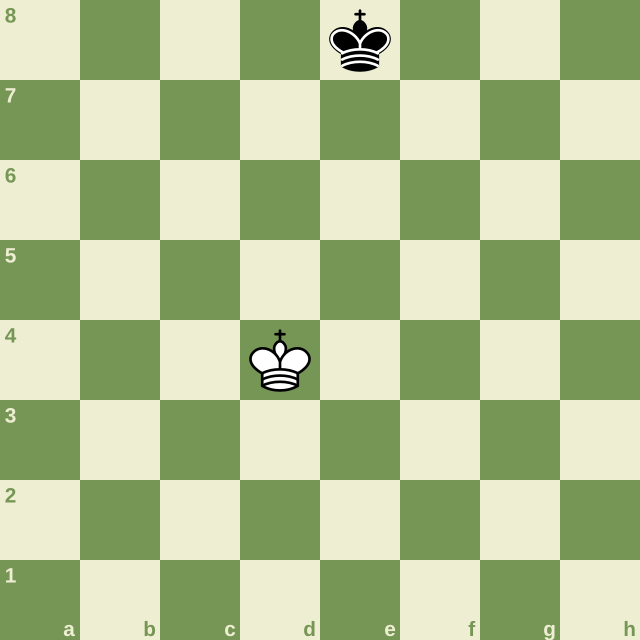
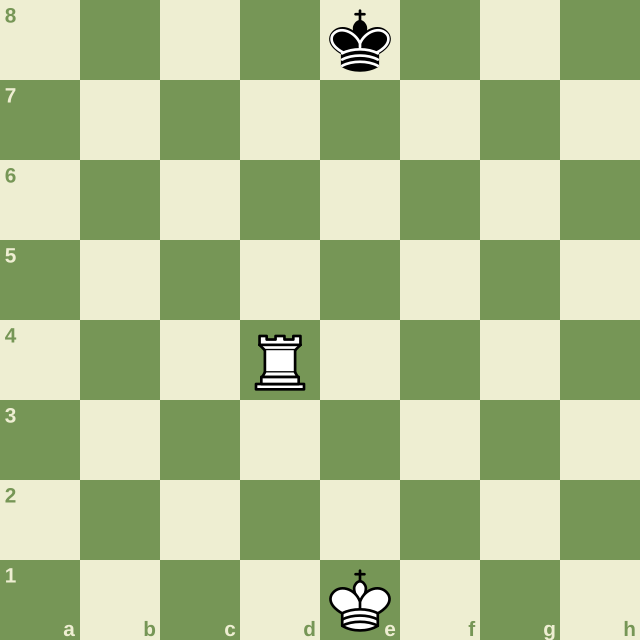
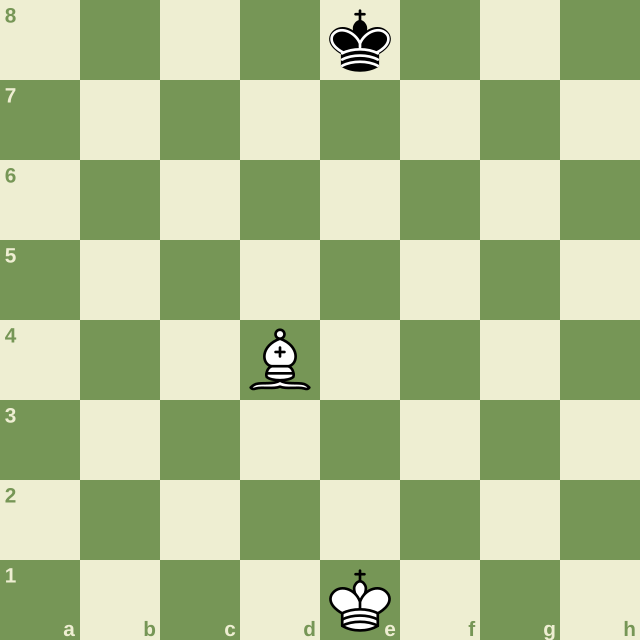
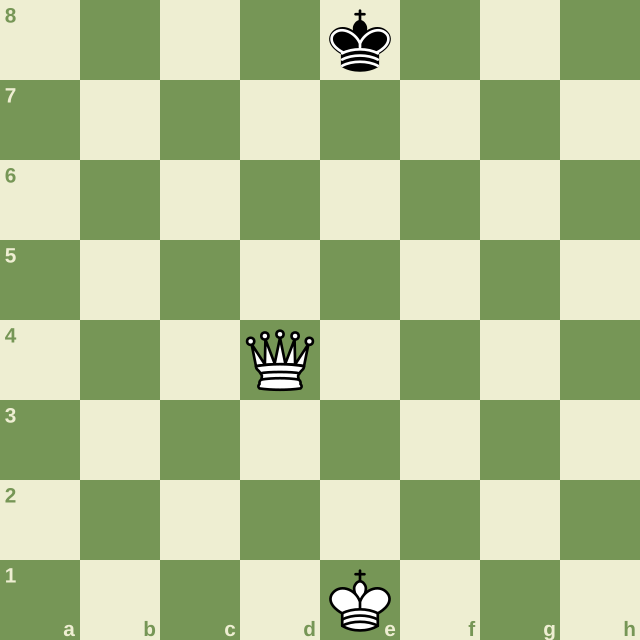
The king moves one square in any direction. The rook moves any distance in a straight line, the bishop any distance diagonally, and the queen either way. The knight jumps in an L shape. Pawns move forward and capture diagonally.
The rule
- 1King: one square in any direction, never onto an attacked square.
- 2Rook: any number of squares along a rank or file. Bishop: any number of squares diagonally, so it stays on one colour all game.
- 3Queen: like a rook and a bishop combined.
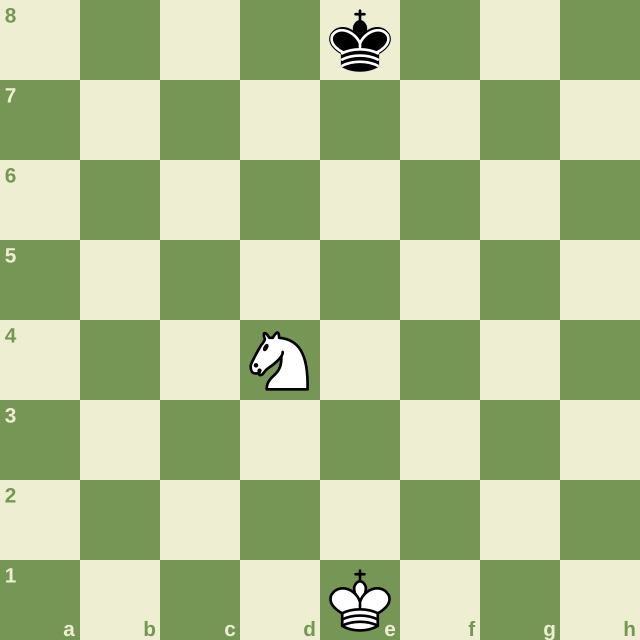
- 4Knight: two squares one way and one square to the side, jumping over anything in between.
- 5Only the knight jumps. Every other piece stops at the first piece in its path, capturing it if it is an enemy piece.
See it on the board
Questions
Which piece is the most powerful?
The queen, because she moves like a rook and a bishop at once. The king is the most important, since losing it loses the game, but as a fighting piece it is one of the weakest.
Can pieces jump over other pieces?
Only the knight. The king, queen, rook and bishop all stop when something is in the way; they can capture an enemy piece in their path but cannot pass it. Castling is the one move where the rook passes the king.
How do pawns move?
One square forward, or two from their starting square, and they capture one square diagonally forward. They never move backwards. The pawn page has the full rules, including promotion and en passant.
Next step
Lesson · 5 minWhat is each piece worth?Now that you know how they move: what each piece is worth.Source: FIDE Laws of Chess (effective 1 January 2023), Articles 3.2 to 3.8. Every diagram on this page is checked against the rules by code: how we check.