Chess rules
How does the knight move?
The knight moves in an L shape: two squares in a straight line, then one square to the side. It is the only piece that jumps over others, so a crowded board does not stop it. Every move takes it to a square of the other colour.
The rule
- 1Two squares along a rank or file, then one square at a right angle: an L.
- 2It jumps: pieces on the squares in between do not matter.
- 3It captures by landing on an enemy piece, like every other piece.
- 4It always lands on the opposite colour to the one it left.
See it on the board
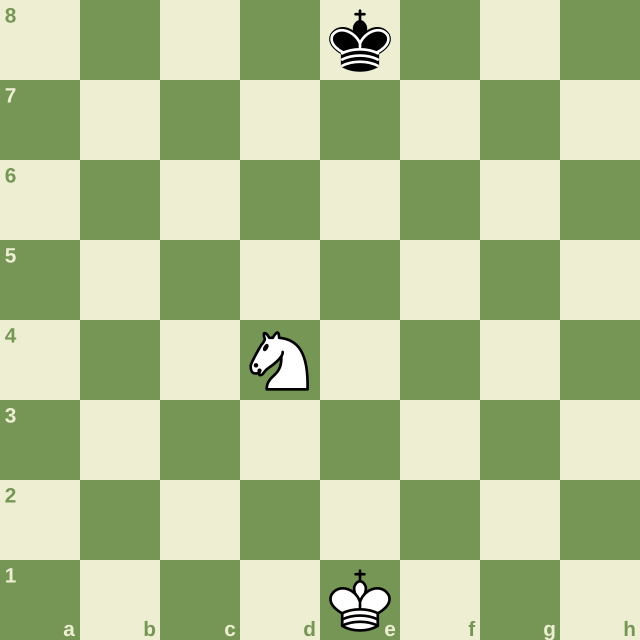
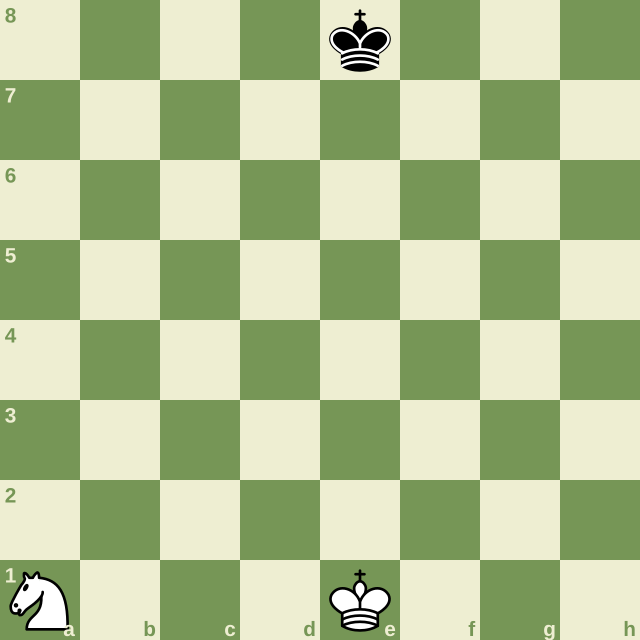
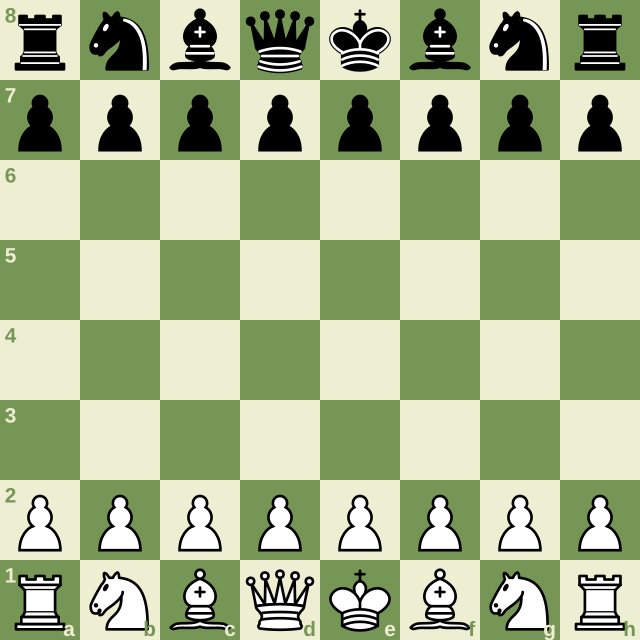
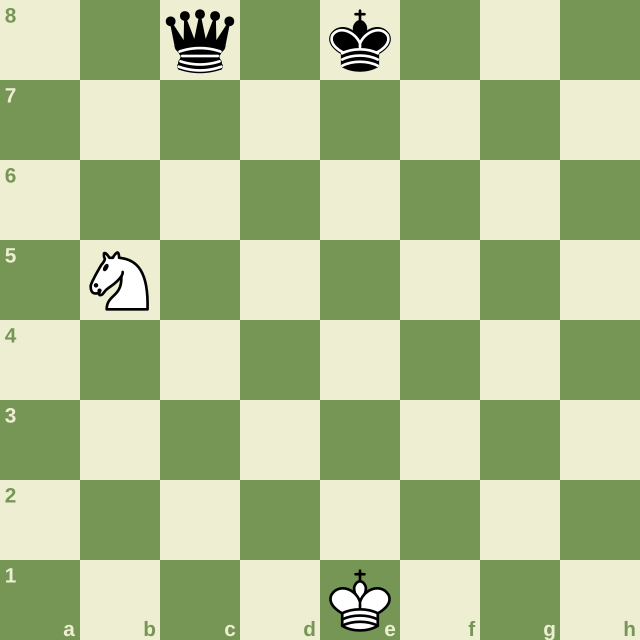
Questions
Can the knight jump over pieces?
Yes, it is the only piece that can. Pieces of either colour on the squares it passes over do not block it; only the square where it lands matters.
Is the knight's move always an L?
Yes: two squares in one direction and one to the side, or one and then two, which is the same L turned around. It cannot move one square straight or diagonally.
Why are knight forks so common?
Because a knight attacks in a pattern no other piece shares. A queen or rook that attacks the knight is not attacked back, so two valuable pieces can be hit at once by the cheapest attacker on the board.
Next step
Lesson · 7 minForks: attack two things at onceThe knight's favourite trick: attack two pieces at once.Source: FIDE Laws of Chess (effective 1 January 2023), Article 3.6. Every diagram on this page is checked against the rules by code: how we check.