Chess rules
Stalemate or checkmate: what is the difference?
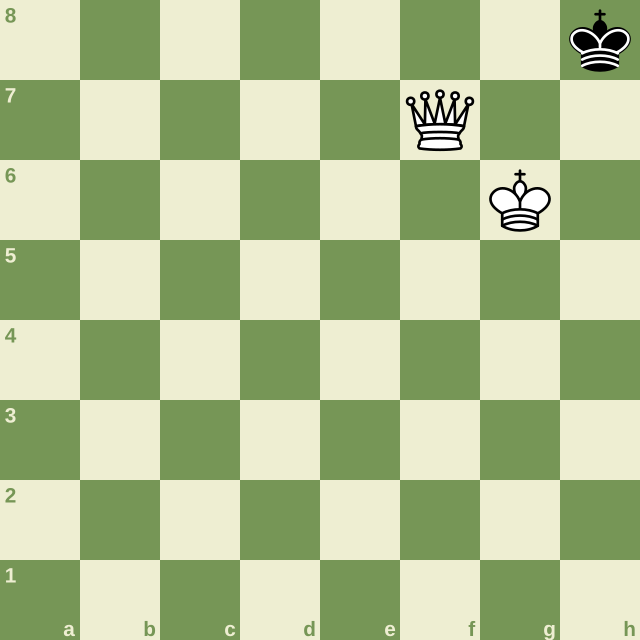
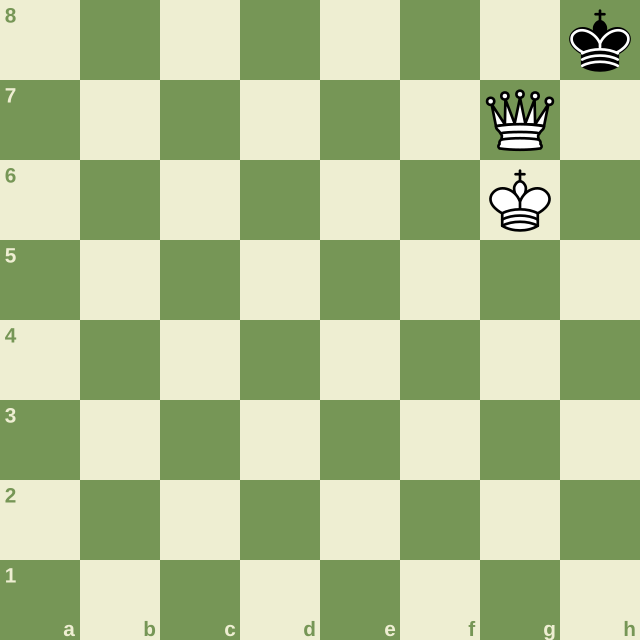
Checkmate means the king is in check and has no way out: the game is won. Stalemate means the player to move is not in check but has no legal move at all: the game is a draw.
The rule
- 1Checkmate: your king is in check, and no move gets it out of check. You lose.
- 2Stalemate: your king is not in check, and you have no legal move with any piece. The game is drawn.
- 3So when you are winning, always leave the other king a legal move until you can deliver mate.
See it on the board
Questions
Is stalemate a win or a draw?
A draw. It does not matter how much material the other side has: if the player to move has no legal move and is not in check, the game ends level.
How do I avoid stalemating my opponent?
Before each move when you are far ahead, look at the enemy king and count its legal moves after your move. If the answer is zero and you are not giving check, play something else.
Next step
Lesson · 6 minFinish with a queen or a rookWin the won endgame: mate with a queen or a rook, without giving stalemate.Source: FIDE Laws of Chess (effective 1 January 2023), Articles 5.1.1 and 5.2.1. Every diagram on this page is checked against the rules by code: how we check.