Chess rules
How does a pawn move?
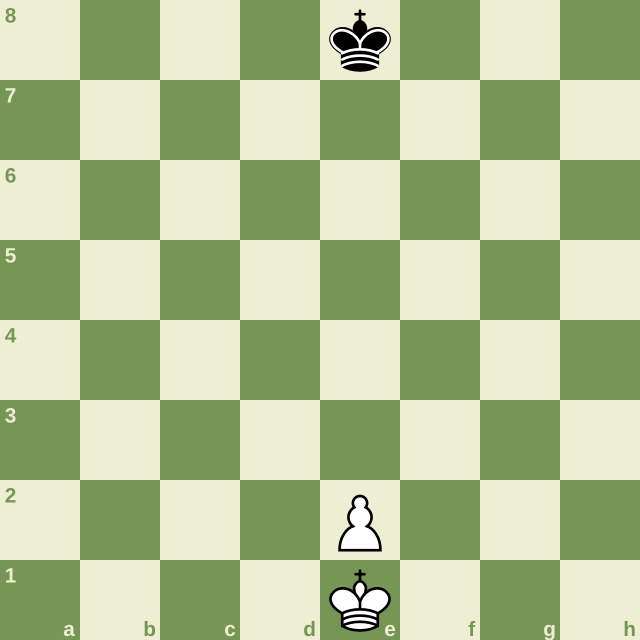
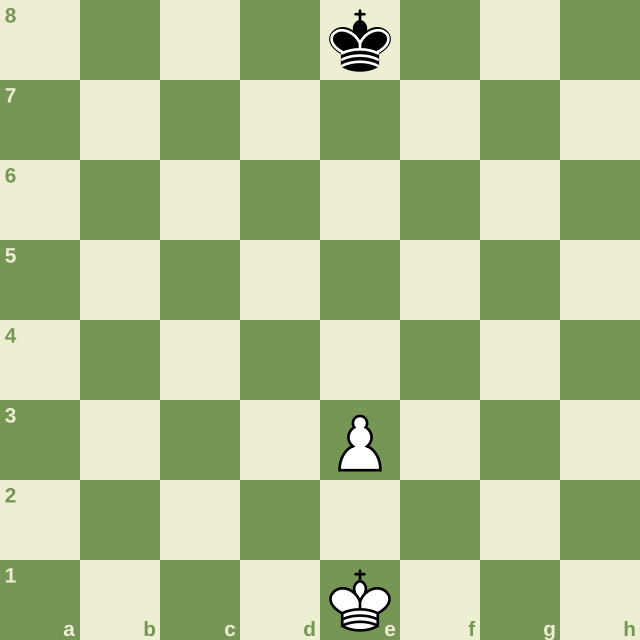
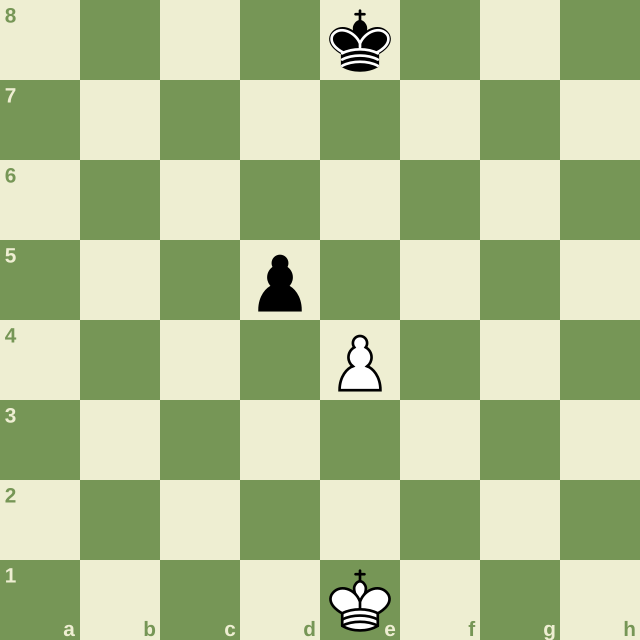
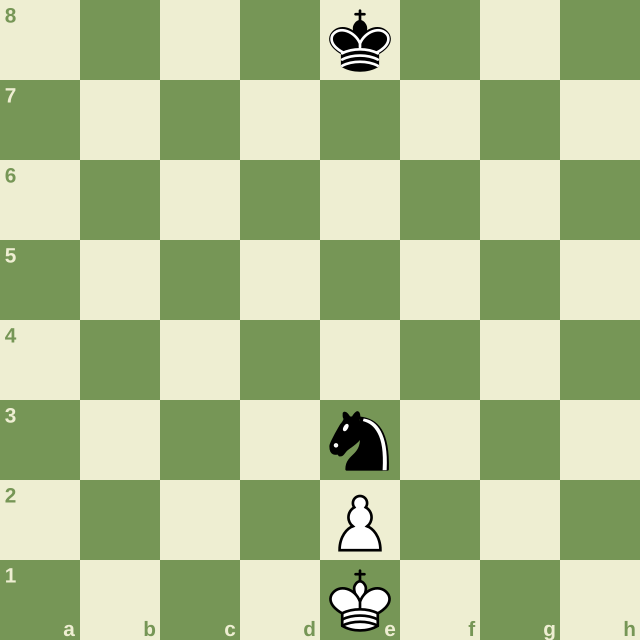
A pawn moves one square straight forward, or two squares on its very first move, and captures one square diagonally forward. It never moves backwards or sideways, and it cannot capture the piece straight in front of it.
The rule
- 1A pawn moves one square straight forward, onto an empty square.
- 2On its first move it may go two squares instead, if both squares are empty.
- 3It captures one square diagonally forward, never straight ahead.
- 4It never moves backwards. On the last rank it is promoted, and beside a pawn that has just moved two squares it may capture en passant.
See it on the board
Questions
Can a pawn move backwards?
No. A pawn only ever moves towards the opponent's side, which is why every pawn move is a small, permanent decision. Every other piece can retreat; a pawn cannot.
Can a pawn move two squares later in the game?
Only if that pawn has never moved. Each pawn gets its own double step from its starting square, whenever you choose to use it. Once it has moved even one square, the double step is gone for that pawn.
Can a pawn capture forward or sideways?
No. A pawn captures only one square diagonally forward. A piece straight in front of a pawn blocks it completely, which is how pawns end up locked against each other.
Next step
RuleWhat is en passant?The one pawn capture that surprises everybody.Source: FIDE Laws of Chess (effective 1 January 2023), Article 3.7. Every diagram on this page is checked against the rules by code: how we check.